
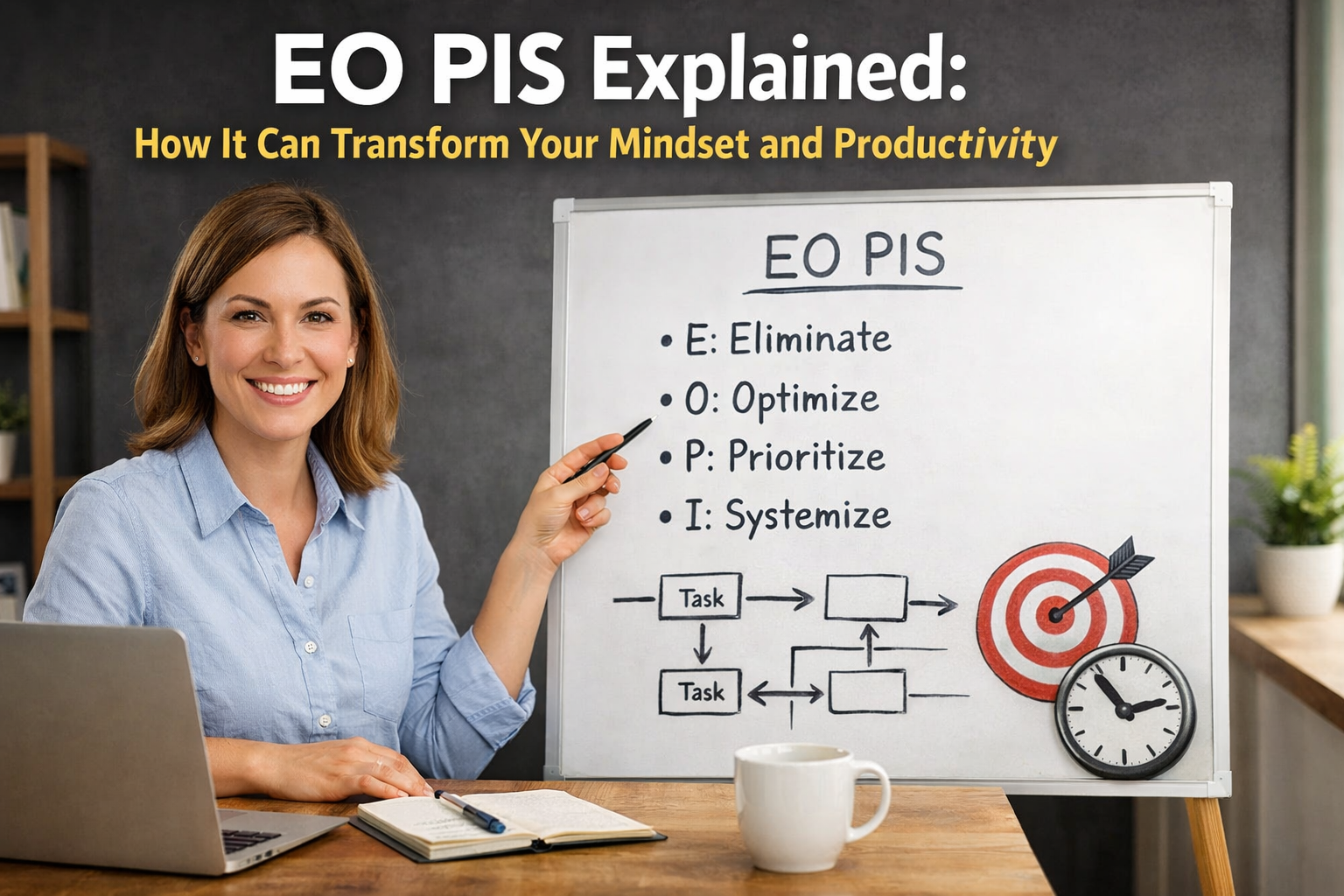
Are you ready to revolutionize your mindset and boost your productivity? Enter EO PIS, a transformative approach that shifts the way we think about performance indicators. Moving beyond traditional metrics, EO PIS focuses on outcomes rather than outputs, enabling you to harness deeper insights into your work processes. Whether you’re an entrepreneur or part of a corporate team, understanding EO PIS can set you on a path toward remarkable growth and efficiency. Let’s dive into how this innovative strategy can reshape not just how we measure success but also how we achieve it!
Understanding EO PIS
EO PIS stands for Essential Outcomes Performance Indicator System. It shifts the focus from traditional metrics to essential outcomes that truly matter in your work environment. By emphasizing results rather than activity levels, EO PIS encourages a deeper understanding of performance.
This approach allows individuals and teams to prioritize what drives success. Instead of just counting tasks completed, it measures the impact those tasks have on overall goals.
Implementing EO PIS fosters a culture of accountability and alignment with strategic objectives. It promotes clarity in decision-making while ensuring everyone’s efforts contribute meaningfully toward larger aspirations.
Benefits of Implementing EO PIS
Implementing EO PIS can significantly enhance clarity in your objectives. By focusing on outcomes rather than just tasks, teams gain a clearer understanding of their goals and the impact of their work. This shift transforms how individuals approach their responsibilities.
Another benefit is improved accountability. With defined outcome-oriented metrics, team members can see how their contributions align with broader organizational aims. This fosters a sense of ownership over results.
EO PIS encourages continuous improvement. By regularly assessing progress against key outcomes, organizations can adapt strategies quickly to optimize performance and drive innovation effectively.
Implementation Techniques for EO PIS
To implement EO PIS effectively, start by clearly defining your objectives. Align these goals with the broader vision of your organization. This creates a strong foundation for measuring progress.
Next, engage team members in the process. Involve them in discussions around what metrics matter most. Their insights can lead to a more focused approach.
Utilize technology and tools that facilitate real-time data tracking. Invest in software solutions that provide intuitive dashboards. These will empower teams to monitor their performance continuously and make adjustments as needed.
Leveraging EO PIS for Success
Leveraging EO PIS can redefine your trajectory toward success. By adopting this framework, you cultivate a proactive mindset that aligns with your goals. It encourages continuous improvement and real-time feedback.
Engaging with EO PIS means embracing adaptability. You learn to pivot quickly in response to evolving circumstances or new opportunities. This agility fosters resilience in the face of challenges.
Moreover, EO PIS promotes collaboration across teams. When everyone shares insights and data, it enhances collective problem-solving efforts. Together, you can achieve exceptional results while remaining focused on your objectives.
Case Studies: Success Stories of EO PIS Implementation
Many organizations have successfully implemented EO PIS, transforming their operations. One tech startup saw a 40% boost in productivity after adopting this innovative framework. By prioritizing employee engagement and feedback, they created a thriving workplace culture.
Another example comes from the retail sector, where a chain used EO PIS to streamline inventory management. This led to reduced waste and improved customer satisfaction scores. Real-time insights allowed them to respond swiftly to market changes.
In healthcare, an institution utilized EO PIS for patient care metrics. Enhanced communication between departments resulted in faster treatment times and better health outcomes for patients.
Challenges and Considerations in Implementing EO PIS
Implementing EO PIS can present various challenges. Resistance to change is often the most significant hurdle. Teams accustomed to traditional metrics may struggle with new processes and mindsets.
Another consideration is data quality. Accurate, real-time data is essential for effective EO PIS performance. If the underlying data isn’t reliable, decision-making suffers.
Additionally, aligning EO PIS with organizational culture takes time and effort. Training employees on this innovative approach requires resources and commitment from leadership to ensure successful adoption across all levels of the organization.
EO PIS vs. Traditional KPIs
EO PIS emphasizes a holistic approach to performance, focusing on overall outcomes rather than just numerical targets. This shift encourages teams to look beyond traditional KPIs that often prioritize short-term results.
While KPIs may track specific metrics like sales figures or operational efficiency, EO PIS integrates various factors influencing success. It fosters collaboration and creativity among team members by aligning efforts with broader organizational goals.
Traditional KPIs can create silos within departments, leading to competition over cooperation. In contrast, EO PIS promotes a culture of shared responsibility and collective growth for sustained improvement across the organization.
EO PIS and Real-Time Metrics: A Synergistic Approach
EO PIS thrives on the integration of real-time metrics. This dynamic combination allows organizations to adjust strategies instantly based on current data. The agility provided by real-time insights enhances decision-making processes.
When teams can monitor performance continuously, they become more responsive to challenges and opportunities. Instant feedback loops foster a culture of rapid adaptation, ensuring that goals align closely with evolving circumstances.
Employing EO PIS alongside real-time metrics creates a powerful synergy. It not only boosts productivity but also empowers employees to take ownership of their work, driving engagement and innovation throughout the organization.
The Role of AI and Machine Learning in EO PIS
AI and machine learning significantly enhance EO PIS by providing real-time insights. These technologies analyze vast amounts of data quickly, identifying trends and patterns that human analysts might miss. This allows businesses to make informed decisions faster.
Moreover, AI can automate routine tasks within the EO PIS framework. By reducing manual input, teams can focus on strategy rather than getting bogged down in data collection.
Machine learning algorithms continually improve with each interaction, refining their predictions over time. This adaptability ensures that organizations remain agile in a fast-paced market landscape, optimizing performance continuously.
The Future of EO PIS
The future of EO PIS looks promising as organizations increasingly embrace data-driven decision-making. With businesses seeking innovative ways to boost productivity, EO PIS will continue to evolve, integrating new technologies and methodologies.
As artificial intelligence and machine learning advance, they will play a crucial role in optimizing EO PIS frameworks. These tools can provide deeper insights into employee performance and help identify areas for improvement more efficiently.
Moreover, the growing emphasis on flexible work environments means that EO PIS must adapt. Companies will need to ensure that these systems support remote teams while maintaining engagement and accountability across diverse settings.
Conclusion
The journey into the world of EO PIS reveals its potential to reshape not only productivity but also mindset. Adopting EO PIS can lead to clearer objectives and enhanced focus. As organizations look toward a future driven by data and efficiency, embracing this framework is crucial.
Next steps involve assessing current practices and identifying areas for improvement. Start small, perhaps with a pilot program that integrates EO PIS principles. Monitor progress closely, adjusting as necessary to maximize benefits.
Engaging team members in this transition fosters buy-in and establishes a culture centered on growth and adaptability. The evolving landscape of work demands innovative approaches like EO PIS, making it an essential tool for those seeking success today and tomorrow.